
Health library
Back to health libraryCircadian rhythms and your health
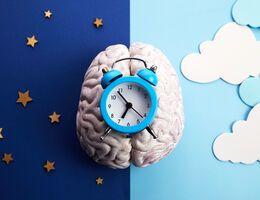
Dec. 4, 2025—Your body has natural rhythms, and disrupting them could mess with your sleep and your health. That's among the takeaways from an American Heart Association (AHA) scientific statement recently published in Circulation. The statement focused on circadian rhythms and how they affect heart and metabolic health.
Your body clock and your well-being
You might have heard that your circadian rhythm tells your body when to sleep and wake up. But you actually have multiple circadian rhythms—biological clocks that affect bodily processes such as sleep, blood pressure and metabolism, as well as your mood and behaviors.
According to the AHA, a disrupted circadian rhythm can raise your risk for a wide range of health concerns, including:
- Diabetes or prediabetes.
- Heart disease.
- High blood pressure.
- Sleep problems.
- Weight gain.
What throws the rhythm off?
The brain has a central circadian clock. And organs and tissues throughout the body—including the cardiovascular system—also have circadian clocks. These daily rhythms are synchronized by daylight and darkness, when light (or a lack of it) enters the eyes. They are also affected by cues like when you eat, sleep or exercise.
Doing shift work, having an irregular sleep schedule or being exposed to bright light at the wrong times can all affect circadian health, says the AHA. So can eating or exercising at times that disrupt your natural rhythms.
Some people are naturally night owls, while others are early birds. This is what experts call a person's chronotype, and it can also affect your circadian rhythms. For instance, having to get up early if you're a night owl or working the night shift if you're a morning person can throw off your rhythm.
Staying in rhythm
Fortunately, there are things you can do to help support a healthy circadian rhythm. Start with these suggestions, based on advice from the National Sleep Foundation and other experts.
Catch some morning rays. Exposure to bright light first thing in the morning can help align your circadian rhythms. Your body is most sensitive to light in the first hour after you wake.
Try to spend a few minutes soaking up light from the sun (or a lamp). You could go for a short walk or sit by a window.
Dim the lights at night. Bright light in the evening can disrupt your body's sleep-wake cycle. It also suppresses your body's production of melatonin, a sleep hormone. That's especially true of the blue light from devices.
Try dimming the lights and turning off your phone, TV or other screens about one hour before bedtime. Do something else relaxing, like reading, listening to calming music or taking a bath.
Keep a sleep schedule. Once you're on a sleep-wake schedule that works for you, stick to it. That means going to bed and waking up at the same time every day, even on days off from work or school.
Get in an earlier workout. Regular exercise may help you sleep better. But doing vigorous activity late in the evening may disrupt your circadian rhythm (and make it hard to fall asleep).
Close the kitchen at night. Eating during the day may align better with your body clock. But skipping meals might also disrupt your circadian rhythms. So don't forgo that late-night snack if you're truly hungry.
Sources
- Arthritis Foundation. "Perfect Timing: Circadian Rhythms, Your Health and Your Arthritis." https://www.arthritis.org/health-wellness/about-arthritis/understanding-arthritis/circadian-rhythms-and-arthritis.
- Circulation. "Role of Circadian Health in Cardiometabolic Health and Disease Risk: A Scientific Statement From the American Heart Association." https://www.ahajournals.org/doi/10.1161/CIR.0000000000001388.
- JAMA. "Light Exposure at Night and Cardiovascular Disease Incidence." https://jamanetwork.com/journals/jamanetworkopen/fullarticle/2840489.
- JAMA. "New Insights on Circadian Health and Cardiometabolic Disease—Light, Sleep, Food, Exercise and More." https://jamanetwork.com/journals/jama/fullarticle/2841657.
- National Sleep Foundation. "Good Light, Bad Light and Better Sleep." https://www.thensf.org/good-light-bad-light-and-better-sleep/.
- Sleep Foundation. "Circadian Rhythm." https://www.sleepfoundation.org/circadian-rhythm.
- Sleep Foundation. "How to Fix Your Circadian Rhythm: 6 Easy Steps." https://www.sleepfoundation.org/circadian-rhythm/can-you-change-your-circadian-rhythm.
- Sleep Foundation. "Light and Sleep." https://www.sleepfoundation.org/bedroom-environment/light-and-sleep.